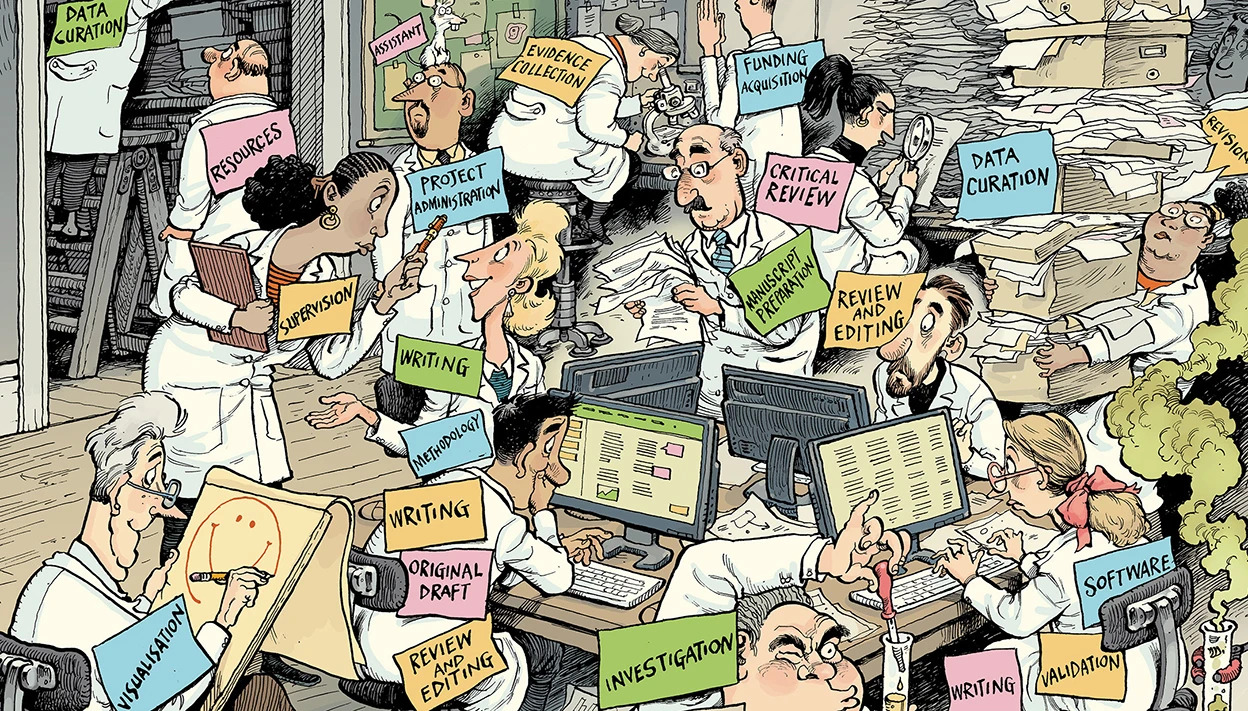
Nature has published a news piece marking the tenth anniversary of the CRediT taxonomy, in which it cites research conducted by the Unit for Computational Humanities and Social Sciences (U-CHASS). The preprint “Beyond authorship: Analyzing disciplinary patterns of contribution statements using the CRediT taxonomy” analyzes more than 700,000 articles from Elsevier and PLOS to study how author contributions are distributed across scientific disciplines. The study reveals systematic patterns between authorship order and contribution types, as well as marked disciplinary differences, highlighting the potential of the CRediT taxonomy to improve transparency and fairness in research assessment.
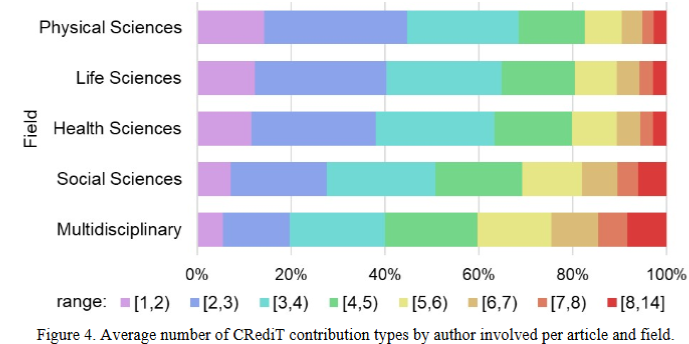
The referenced study, authored by Elvira González-Salmón, Victoria Di Césare, Aoxia Xiao, and Nicolás Robinson-García, is openly available on Zenodo:
🔗 https://zenodo.org/records/17602125
This type of data—detailed contribution statements linked to author identifiers—forms the core methodological basis of the STITCH project (Scientific Teams and InequaliTies: Collaboration and Heterogeneity in Science). STITCH builds on these datasets to model the internal organization of scientific teams, examine the distribution of labor, study structural inequalities, and develop predictive models of collaboration. As described in the project’s scientific report, this unique dataset, made possible through data agreements with Elsevier and PLOS, enables an unprecedented large-scale analysis of team dynamics and their implications for research careers, leadership, and recognition.
The Nature article highlights precisely this potential: the ability of CRediT data to shed light on how science operates and to inform more nuanced and equitable research evaluation frameworks. The study led by González-Salmón, Di Césare, Xiao, and Robinson-García positions U-CHASS as an international reference in contributorship analysis and advanced bibliometric methodologies.
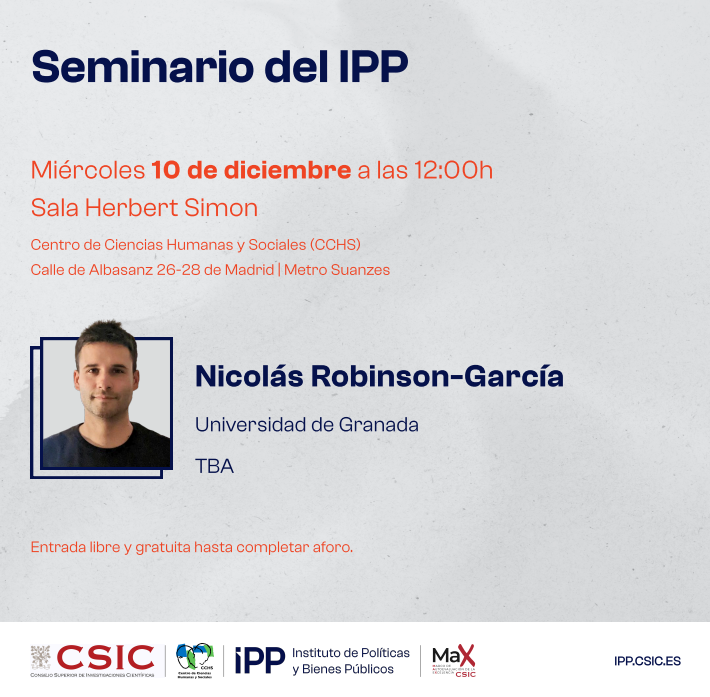
As part of ongoing dissemination efforts, Nicolás Robinson-García will present the study’s findings on December 10 at the Institute of Public Goods and Policies (IPP-CSIC), in a session dedicated to discussing the value of contributorship data for understanding and evaluating scientific activity.